
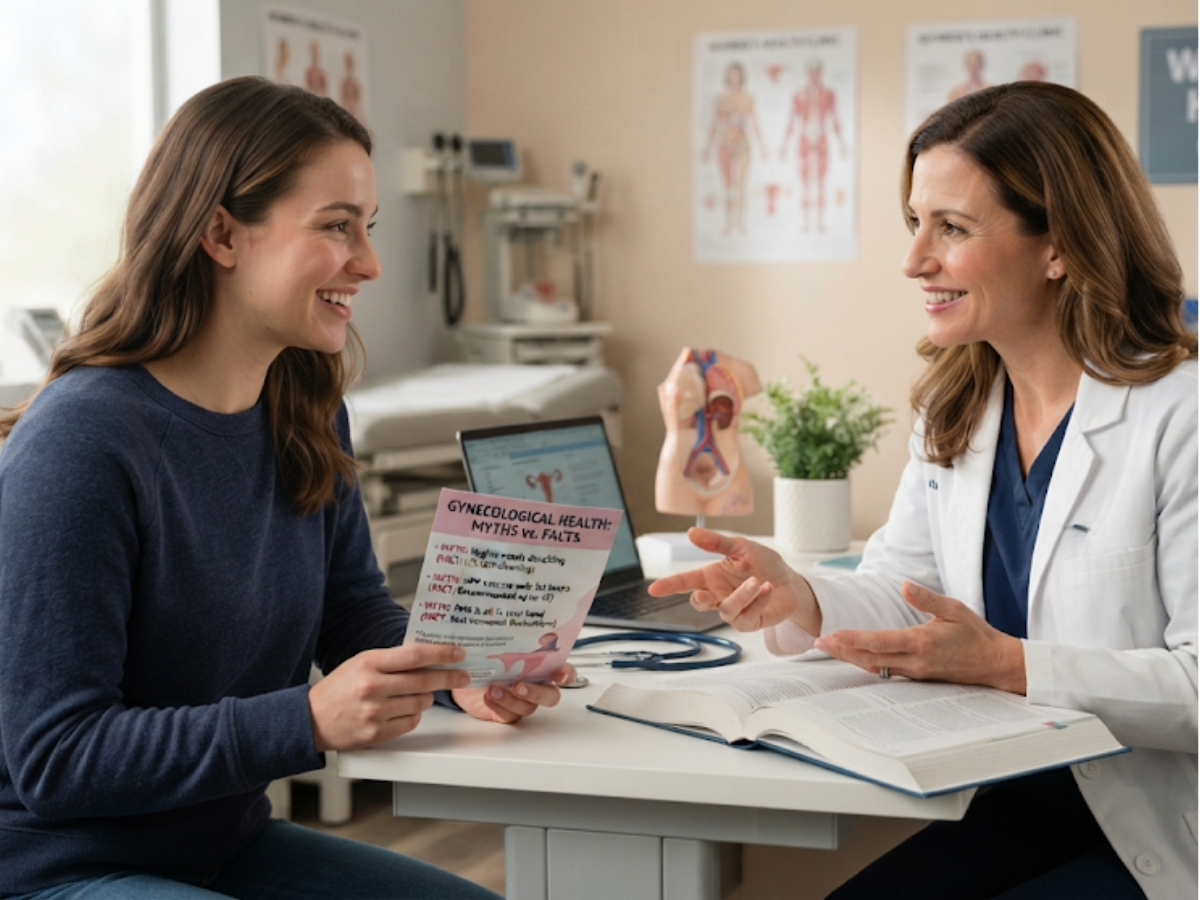
Let’s be honest—when it comes to women’s health, there’s a lot of confusion out there. From advice passed down by relatives to random internet tips, it’s hard to know what’s actually true and what’s just… noise.
If you’ve ever wondered “Is this normal?” or “Should I be worried about this symptom?”—you’re definitely not alone.
This blog is here to clear the air. No jargon. No judgment. Just honest, expert-backed clarity.
Table of Contents
ToggleThe Hook: Why This Topic Matters More Than You Think
Many women ignore symptoms or delay check-ups simply because of myths they’ve believed for years.
Some think pain is “normal.” Others feel screenings aren’t needed unless something feels wrong.
Here’s the truth: early awareness can literally save lives.
Let’s bust some of the most common myths—one by one.
The Deep Dive: Myths vs. Facts (Let’s Break It Down Simply)
🧠 What is Gynecological Health?
Gynecological health refers to the overall health of a woman’s reproductive system, including the uterus, ovaries, cervix, fallopian tubes, and vagina.
In simple terms:
- It covers periods, fertility, infections, hormonal balance, and cancers
- It changes through different life stages—teens, pregnancy, menopause
- It requires regular monitoring, not just symptom-based visits
Myth #1: “Painful periods are normal—just deal with it”
❌ Myth
Period pain is something every woman must tolerate.
✅ Fact
Severe or disabling pain is NOT normal.
If your periods:
- Stop you from going to work or school
- Require strong painkillers regularly
- Come with heavy bleeding or clots
…it could be a sign of conditions like:
- Endometriosis
- Fibroids
- Adenomyosis
👉 Quick Answer (AEO/AIO):
- What causes painful periods? → Conditions like endometriosis or fibroids can cause severe pain.
- When should I see a doctor? → If pain affects daily life or worsens over time.
Myth #2: “You don’t need a gynecologist unless you’re pregnant”
❌ Myth
Gynec visits are only for pregnancy or major problems.
✅ Fact
Regular check-ups help detect problems early—even before symptoms appear.
Routine visits help with:
- Cervical cancer screening (Pap smear)
- HPV detection
- Hormonal imbalance diagnosis
- Preventive care
👉 Think of it like servicing your car—you don’t wait for a breakdown.
Myth #3: “White discharge always means infection”
❌ Myth
Any vaginal discharge is a sign of disease.
✅ Fact
Normal discharge is part of a healthy reproductive system.
What’s normal?
- Clear or milky white
- No strong odor
- Changes during cycle
What’s NOT normal?
- Yellow/green discharge
- Strong smell
- Itching or irritation
👉 Quick Answer:
- Why does discharge happen? → It helps keep the vagina clean and balanced.
- When to worry? → When it changes color, smell, or causes discomfort.
Myth #4: “Gynecological cancers only affect older women”
❌ Myth
Young women don’t need to worry about cancers.
✅ Fact
Certain gynecological cancers can affect younger women too.
Examples:
- Cervical cancer (linked to HPV infection)
- Ovarian cancer (can occur at any age)
Early detection dramatically improves outcomes.
👉 How to protect yourself:
- Regular screenings
- HPV vaccination
- Awareness of symptoms
Myth #5: “Irregular periods are always due to stress”
❌ Myth
Missed or irregular cycles are harmless.
✅ Fact
Irregular periods can signal underlying hormonal or medical issues.
Possible causes:
- PCOS (Polycystic Ovary Syndrome)
- Thyroid problems
- Weight fluctuations
- Hormonal imbalance
👉 Quick Answer:
- Is it okay to skip periods often? → No, frequent irregularity needs evaluation.
- When to consult? → If cycles are consistently irregular or absent.
Myth #6: “Surgery always means big scars and long recovery”
❌ Myth
All gynecological surgeries are painful and invasive.
✅ Fact
Modern techniques like laparoscopic and robotic surgery are minimally invasive.
Benefits:
- Smaller incisions
- Faster recovery
- Less pain
- Better outcomes
This is especially important in gynecological cancers, where precision matters.
How to Take Charge of Your Gynecological Health
Here’s a simple, practical checklist:
✔️ What you should do regularly:
- Annual gynec check-up
- Pap smear (as advised)
- Monitor menstrual cycle
- Maintain hygiene
✔️ Watch out for:
- Unusual bleeding
- Persistent pain
- Sudden weight changes
- Unexplained fatigue
✔️ Lifestyle habits that help:
- Balanced diet
- Regular exercise
- Stress management
- Safe sexual practices
Meet the Expert
👩⚕️ Dr. Anjali Jain
Senior Consultant – Gynae Oncology and Robotic Surgeries
With over 14 years of experience, Dr. Anjali Jain specializes in gynecological cancers and advanced robotic surgeries. She is known for combining cutting-edge medical expertise with a deeply compassionate approach, ensuring every patient feels heard, informed, and supported.
Currently practicing at:
Medanta – The Medicity, Sector 38, Gurugram, Haryana
Her approach is simple:
“Educate patients, detect early, and treat with precision.”
Patient Voice: Real Stories, Real Confidence
💬 “I ignored my irregular periods for years thinking it was stress. Dr. Anjali diagnosed PCOS early and guided me step-by-step. I finally feel in control of my health.”
— Neha S., Gurugram
💬 “I was terrified when I heard the word ‘tumor’. But the robotic surgery was smooth, recovery was fast, and the support I received was incredible.”
— Priya M., Delhi NCR
💬 “She explains everything so clearly. No rushing, no confusion—just honest advice. That’s rare.”
— Ritu K., Gurgaon
The Fix: Your Simple Action Plan
Here’s a quick roadmap to better gynecological health:
| Step | What to Do | Why It Matters |
| 1 | Schedule annual check-up | Early detection |
| 2 | Track your cycle | Identify irregularities |
| 3 | Get recommended screenings | Prevent cancers |
| 4 | Don’t ignore symptoms | Timely treatment |
| 5 | Choose expert care | Better outcomes |
FAQs: Straight Answers to Common Questions
1. “How often should I visit a gynecologist?”
You should visit at least once a year. Even if you feel fine, regular check-ups help catch issues early.
2. “Is it normal to have no symptoms in early gynecological cancers?”
Yes, many early-stage cancers show no symptoms. That’s why screening is so important.
3. “Do I need a Pap smear if I feel healthy?”
Yes, you still need it. A Pap smear detects changes before they turn into cancer.
4. “Can lifestyle really affect my reproductive health?”
Absolutely, lifestyle plays a major role. Diet, stress, and exercise directly impact hormones and cycles.
5. “Are robotic surgeries safe?”
Yes, robotic surgeries are safe and highly precise. They often result in faster recovery and less pain.
6. “When should I worry about period irregularities?”
You should worry if irregularity persists for months. Consistent changes need medical evaluation.
Next Steps: Take Control of Your Health Today
You don’t have to guess, Google endlessly, or ignore symptoms anymore.
Expert care is just one step away.
📞 Call Now
+91 95991 50155
📅 Book Your Appointment
📍 Visit Us
Medanta – The Medicity
Sector 38, Gurugram, Haryana, India
Your body speaks—you just need to listen.
And when in doubt, don’t rely on myths.
Trust facts. Trust experts. Trust yourself.