
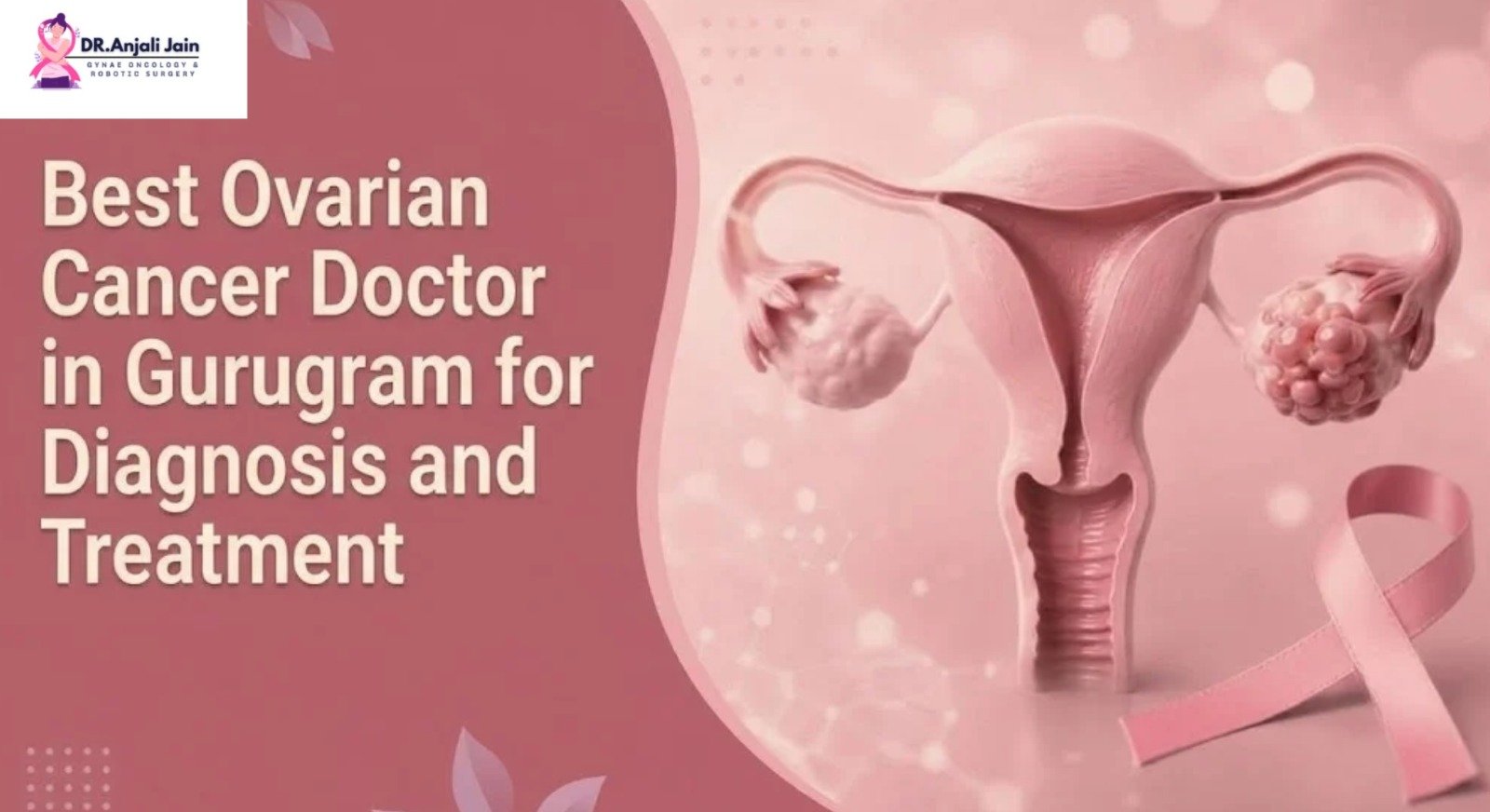
Hearing the word “cancer” can naturally make you feel worried, confused, or overwhelmed. You may be experiencing symptoms such as persistent bloating, pelvic pain, changes in bowel habits, or an ovarian mass found during an ultrasound. You may also have received an abnormal test result and be unsure about what happens next.
The good news is that you do not have to navigate this journey alone. A gynaecologic oncologist is specially trained to diagnose and treat cancers affecting the female reproductive system, including ovarian cancer. Consulting a specialist early can help ensure that your condition is evaluated properly and that appropriate treatment options are considered.
If you are looking for an ovarian cancer doctor in Gurugram, Dr. Anjali Jain is a Consultant in Gynaecology and GynaeOncology at Medanta–The Medicity, Gurugram. Her areas of expertise include ovarian and primary peritoneal malignancies, cytoreductive surgery, HIPEC, laparoscopic surgery, and robotic oncosurgery.
Table of Contents
ToggleWhat Is Ovarian Cancer?
Ovarian cancer is a type of cancer that develops in the ovaries or related tissues. Some cancers that were traditionally considered ovarian cancers may actually originate in the fallopian tubes and later involve the ovaries.
The ovaries are part of the female reproductive system and play an important role in hormone production and reproduction. When abnormal cells begin to grow uncontrollably, they can form a tumour. In some cases, these cancerous cells can spread to nearby tissues or other parts of the body.
Ovarian cancer includes different types and subtypes, and the treatment approach depends on the specific type, stage, tumour characteristics, and overall health of the patient.
What Are the Common Symptoms of Ovarian Cancer?
Ovarian cancer can sometimes be difficult to identify in its early stages because its symptoms may resemble common digestive or menstrual problems.
Symptoms that may need medical evaluation include:
- Persistent bloating or abdominal swelling
- Pelvic or abdominal pain
- Feeling full quickly while eating
- Increased urinary frequency or a sudden urge to urinate
- Changes in bowel habits, such as constipation or diarrhoea
- Persistent fatigue
- Back pain
- Pain during sexual intercourse
- Changes in menstrual patterns
- Unexplained weight loss
- Persistent abdominal discomfort
These symptoms do not necessarily mean that you have ovarian cancer. Conditions such as ovarian cysts, fibroids, endometriosis, digestive problems, and hormonal changes can cause similar symptoms.
However, if symptoms are persistent, recurrent, unusual for you, or becoming more frequent, it is important to consult a doctor rather than assuming they are simply related to digestion or hormonal changes.
Why Is Ovarian Cancer Sometimes Diagnosed Late?
One of the challenges with ovarian cancer is that its early symptoms can be vague or difficult to distinguish from common health problems.
Some women may not experience obvious symptoms until the disease has progressed. According to the American Cancer Society, only a minority of ovarian cancers are detected at an early stage. The organisation also notes that there is currently no screening test that has been shown to reliably detect ovarian cancer early in women at average risk who have no symptoms.
This makes awareness of persistent symptoms particularly important.
If you experience ongoing bloating, pelvic discomfort, abdominal pain, urinary changes, or a feeling of fullness after eating small amounts for several weeks, consider discussing these symptoms with a healthcare professional.
How Is Ovarian Cancer Diagnosed?
There is no single test that can diagnose every case of ovarian cancer. Diagnosis generally involves a combination of medical history, physical examination, imaging, blood tests, and, when appropriate, examination of tissue.
Depending on your symptoms and examination findings, your doctor may recommend the following:
1. Pelvic Examination
A pelvic examination allows the doctor to assess the reproductive organs and look for abnormalities such as swelling, masses, or other concerning findings.
2. Ultrasound
A transvaginal ultrasound is commonly used to examine the ovaries and surrounding structures.
It can help identify:
- Ovarian cysts or masses
- The size and appearance of a mass
- Solid or fluid-filled areas
- Other pelvic abnormalities
However, an ultrasound alone cannot always confirm whether an ovarian mass is cancerous.
3. Blood Tests
Doctors may recommend blood tests, including tumour markers such as CA-125, depending on the clinical situation.
However, CA-125 alone cannot diagnose ovarian cancer. Levels may increase because of several non-cancerous conditions, and some ovarian cancers may not cause an elevated CA-125 level.
Therefore, CA-125 results need to be interpreted along with symptoms, examination findings, imaging, and other investigations.
4. CT Scan or MRI
Imaging such as a CT scan or MRI may be recommended to understand the size and location of a tumour and assess whether there may be disease elsewhere in the abdomen or pelvis.
These scans can also help doctors plan treatment and surgery.
5. Tissue Examination
A definitive diagnosis of cancer generally requires examination of cells or tissue under a microscope. The method used to obtain tissue depends on the individual case and may involve surgery or another appropriate procedure.
Why Consult a Gynae Oncologist for a Suspected Ovarian Cancer?
A gynaecologic oncologist is a specialist trained in managing cancers of the female reproductive system, including ovarian, fallopian tube, uterine, cervical, and related cancers.
Consulting a gynae oncologist when an ovarian mass or suspected cancer is identified can help with:
- Detailed evaluation of the condition
- Understanding imaging and test results
- Assessing the possibility of cancer
- Surgical planning
- Cancer staging
- Discussing chemotherapy and other treatments
- Coordinating multidisciplinary cancer care
The treatment plan is individualised according to the cancer type, stage, tumour characteristics, overall health, and other factors.
Ovarian Cancer Treatment in Gurugram: What Can Treatment Involve?
Ovarian cancer treatment varies from one patient to another. Depending on the diagnosis and stage, treatment may involve surgery, chemotherapy, targeted therapy, hormone therapy, immunotherapy, or a combination of treatments.
Surgery
Surgery is an important part of treatment for many ovarian cancers.
Depending on the disease, surgery may be performed to:
- Remove the tumour
- Determine how extensively the cancer has spread
- Obtain tissue for diagnosis
- Remove visible cancerous disease
For advanced ovarian cancer, cytoreductive surgery, also known as debulking surgery, may be considered. The objective is to remove as much visible cancer as safely possible.
Chemotherapy
Chemotherapy uses anti-cancer medicines to destroy or control cancer cells.
Depending on the individual situation, chemotherapy may be recommended:
- Before surgery
- After surgery
- Along with other treatments
- In cycles over a defined treatment period
The specific medicines and schedule depend on the type and stage of cancer and other patient-specific factors.
HIPEC
HIPEC, or Hyperthermic Intraperitoneal Chemotherapy, involves delivering heated chemotherapy directly into the abdominal cavity during selected surgical procedures.
It may be considered in carefully selected patients undergoing cytoreductive surgery for certain cancers involving the abdominal lining.
Whether HIPEC is appropriate depends on factors such as the type of cancer, extent of disease, previous treatment, overall health, and the goals of treatment.
Minimally Invasive and Robotic Surgery
In selected patients, laparoscopic or robotic surgery may be considered.
These techniques use smaller incisions compared with traditional open surgery and may offer benefits such as reduced surgical trauma and recovery time in appropriately selected cases.
However, minimally invasive or robotic surgery is not suitable for every patient. The surgical approach depends on the cancer type, stage, location, extent of disease, previous surgeries, and the patient’s overall condition.
Meet Dr. Anjali Jain – Gynae Oncologist in Gurugram
Dr. Anjali Jain is a Consultant in Gynaecology and Gynaecology at Medanta–The Medicity, Gurugram.
Her areas of expertise include:
- Ovarian cancer
- Endometrial cancer
- Primary peritoneal malignancies
- Cytoreductive surgery
- HIPEC
- Laparoscopic hysterectomy
- Open hysterectomy
- Cystectomy
- Minimally invasive gynaecological surgery
- Robotic surgery
- Laparoscopic oncosurgery
- Robotic oncosurgery
Qualifications and Training
Dr. Anjali Jain holds:
- MBBS
- DGO
- DNB in Obstetrics & Gynaecology
She has also completed fellowships and advanced training in:
- Minimal Access Surgery
- Gynae Oncology
- Advanced Robotic and Innovative Surgery
Medanta also lists her observation programme in Gynae Oncology at Massachusetts General Hospital, Boston.
The role of specialist cancer care goes beyond performing a procedure. It involves understanding the diagnosis, explaining available treatment approaches, evaluating the extent of disease, and developing a treatment plan suited to the patient’s individual condition.
The Ovarian Cancer Treatment Journey: What to Expect
Every patient’s treatment journey is different. However, the process may generally involve the following stages:
| Step | What Usually Happens |
| 1. Consultation | Symptoms, medical history, previous reports, and concerns are reviewed. |
| 2. Evaluation | Physical examination, ultrasound, blood tests, CT, MRI, or other investigations may be recommended. |
| 3. Diagnosis | Tissue or other appropriate samples may be examined to confirm the diagnosis. |
| 4. Staging | Doctors determine the extent of the disease and whether it has spread. |
| 5. Treatment Planning | Surgery, chemotherapy, targeted treatment, or other approaches are discussed based on the diagnosis. |
| 6. Treatment | The selected treatment is performed and monitored. |
| 7. Follow-Up | Regular appointments and appropriate tests help monitor recovery and disease status. |
The exact sequence can vary depending on the type and stage of ovarian cancer and the patient’s individual circumstances.
Ovarian Cancer in India: Why Awareness Matters
Ovarian cancer is an important health concern for women worldwide.
In India, ovarian cancer was among the more commonly diagnosed cancers affecting women according to the GLOBOCAN 2022 country data.
These figures highlight the importance of awareness and timely medical evaluation. Persistent bloating, abdominal discomfort, changes in digestion, urinary symptoms, or other unusual changes should not automatically be attributed to gas, ageing, or hormonal changes when they continue or recur.
Frequently Asked Questions About Ovarian Cancer
How do I know if bloating could be ovarian cancer?
Persistent or recurring bloating, especially when accompanied by pelvic pain, abdominal discomfort, feeling full quickly, or urinary changes, should be evaluated by a doctor.
Most bloating is not caused by cancer. However, a persistent change from your usual pattern deserves medical attention.
Can an ovarian cyst turn into cancer?
Most ovarian cysts are benign and do not become cancerous. However, some ovarian masses can be malignant.
Your doctor may consider factors such as your age, symptoms, ultrasound findings, size and appearance of the mass, changes over time, and other test results when deciding what evaluation is needed.
Is CA-125 enough to diagnose ovarian cancer?
No. CA-125 alone cannot diagnose ovarian cancer.
CA-125 can be elevated because of several non-cancerous conditions, while some ovarian cancers may not cause an elevated CA-125 level.
Doctors therefore interpret CA-125 alongside imaging, symptoms, examination findings, and other investigations.
What treatments are used for ovarian cancer?
Treatment can include surgery, chemotherapy, targeted therapy, hormone therapy, immunotherapy, or combinations of these treatments.
The appropriate approach depends on the cancer type, stage, tumour characteristics, previous treatment, and overall health.
Should I see a gynae oncologist if an ovarian mass is found?
Consulting a gynaecologic oncologist can be useful when an ovarian mass has concerning features or cancer is suspected.
Not every ovarian mass is cancerous. A specialist can assess the findings and explain whether further investigation, monitoring, surgery, or other treatment may be appropriate.
Is ovarian cancer curable?
Some ovarian cancers can be treated successfully, particularly when detected and treated at an earlier stage. However, outcomes vary considerably depending on the cancer type, stage, tumour characteristics, and response to treatment.
Survival statistics describe groups of patients and cannot predict exactly what will happen to an individual person. Your treating specialist can discuss your individual outlook after evaluating your diagnosis.
When Should You Consult an Ovarian Cancer Specialist?
Consider consulting a gynae oncologist if you have:
- A suspicious ovarian mass on ultrasound
- Persistent or unexplained abdominal bloating
- Recurrent pelvic or abdominal pain
- Unexplained changes in bowel or urinary habits
- An abnormal tumour marker result
- A suspected or confirmed ovarian cancer diagnosis
- A previous diagnosis requiring specialist cancer treatment
- Questions about surgery, chemotherapy, HIPEC, or other treatment options
- A need for a second opinion regarding your diagnosis or treatment plan
Early specialist evaluation can help you understand what your test results mean and what options may be appropriate for your situation.
Consult Dr. Anjali Jain for Ovarian Cancer Care in Gurugram
If you are experiencing persistent bloating, pelvic pain, an abnormal ovarian mass, or have already received a diagnosis of ovarian cancer, consulting a gynae oncologist in Gurugram can help you understand your condition and available treatment options.
Dr. Anjali Jain
Consultant – Gynaecology & GynaeOncology
Medanta–The Medicity, Gurugram
Address: Floor, Medanta–The Medicity, CH Baktawar Singh Rd, Medicity, Islampur Colony, Sector 38, Gurugram, Haryana 122001
Phone: 095991 50155