

👩⚕️ By Dr. Anjali Jain
Senior Consultant – Gynae Oncology & Robotic Surgery | Gurugram, India
Uterine cancer, also known as endometrial cancer, is one of the most common gynecological cancers affecting women, especially after menopause. The good news? Early detection significantly improves treatment outcomes.
If you’re noticing unusual symptoms or want to stay informed, this guide will help you understand everything about uterine cancer symptoms, diagnosis, and when to seek expert care in Gurugram.
Table of Contents
ToggleWhat is Uterine Cancer?
Uterine cancer begins in the lining of the uterus (endometrium). It typically develops slowly and often shows early warning signs, making timely diagnosis possible.
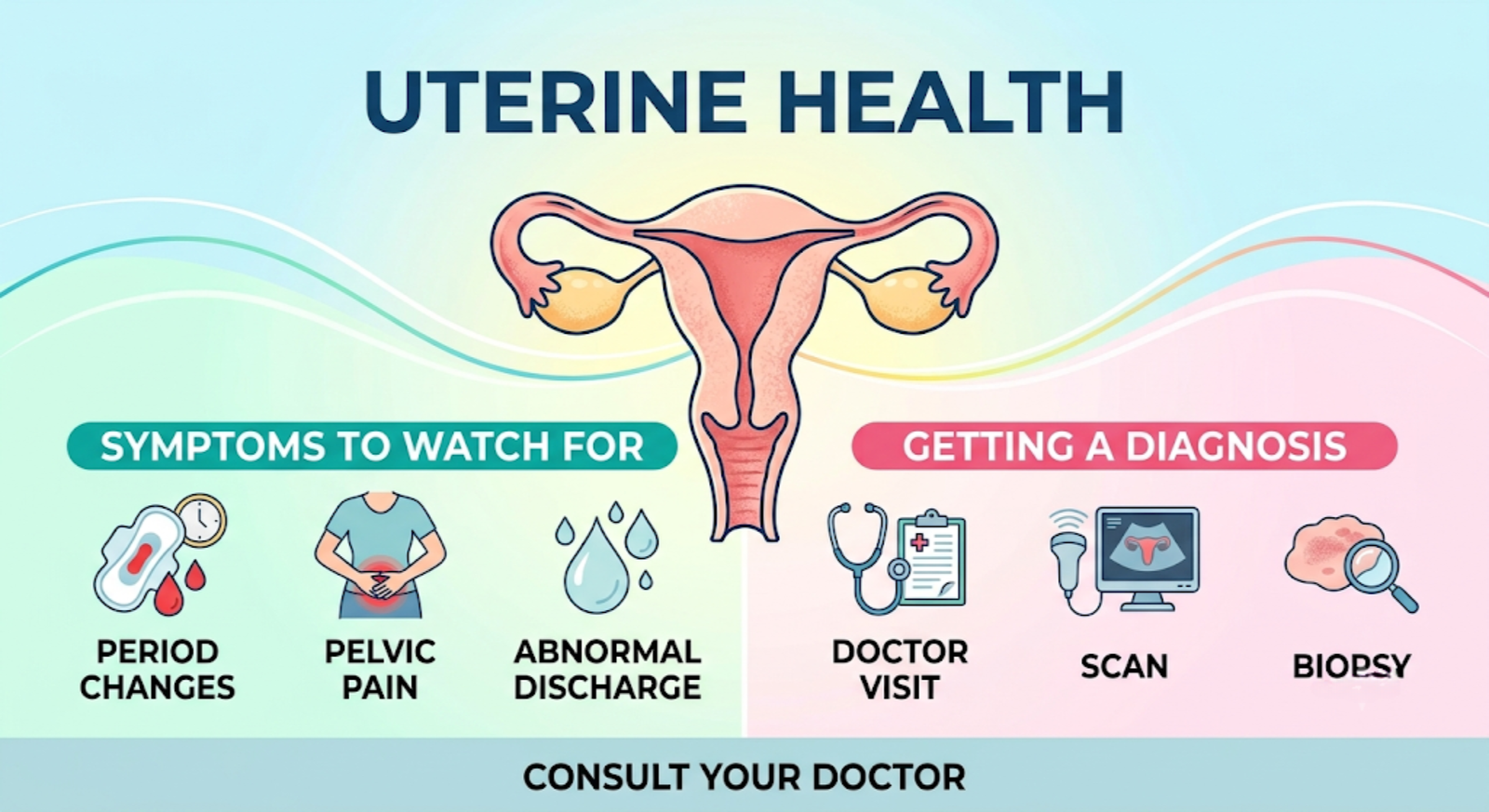
Early Symptoms of Uterine Cancer
Recognizing symptoms early can be life-saving. Here are the most common signs:
🚨 Key Warning Signs
- Abnormal vaginal bleeding (especially after menopause)
- Heavy or prolonged menstrual periods
- Bleeding between periods
- Pelvic pain or pressure
- Unusual vaginal discharge (watery, pink, or foul-smelling)
⚠️ When Should You Be Concerned?
If you experience any abnormal bleeding, do not ignore it. Even a single episode after menopause requires medical evaluation.
Risk Factors You Should Know
Certain factors increase the risk of uterine cancer:
- Age above 50 years
- Obesity
- Diabetes or hypertension
- Hormonal imbalance (excess estrogen)
- Family history of cancer
- PCOS or irregular menstrual cycles
How is Uterine Cancer Diagnosed?
Early and accurate diagnosis is crucial. Here’s how specialists evaluate uterine cancer:
1. Pelvic Examination
A physical exam to check for abnormalities in reproductive organs.
2. Ultrasound (TVS)
Helps measure the thickness of the uterine lining.
3. Endometrial Biopsy
A gold standard test where a small tissue sample is examined for cancer cells.
4. Hysteroscopy
A minimally invasive procedure to visualize the uterus.
5. Advanced Imaging
CT scan / MRI to assess the spread of cancer.
Why Early Diagnosis Matters
Early-stage uterine cancer has a high cure rate (over 90%). Delayed diagnosis can lead to spread beyond the uterus, making treatment more complex.
Advanced Treatment Options Available
With modern medical advancements, treatment is more effective and less invasive:
- Robotic Surgery
- Laparoscopic Hysterectomy
- Targeted Therapy
- Radiation & Chemotherapy (if required)
Under expert care, patients benefit from:
✔ Faster recovery
✔ Minimal pain
✔ Better outcomes
Expert Care in Gurugram
If you are searching for a uterine cancer specialist in Gurugram, consulting an experienced gynecologic oncologist ensures:
- Accurate diagnosis
- Personalized treatment plan
- Access to advanced robotic surgery
Frequently Asked Questions (FAQs)
1. What is the first symptom of uterine cancer?
The most common early symptom is abnormal vaginal bleeding, especially after menopause.
2. Can uterine cancer be detected early?
Yes. Early detection is possible because symptoms appear early, unlike many other cancers.
3. Is uterine cancer curable?
Yes, especially when diagnosed early. Cure rates are very high in early stages.
4. Who is at highest risk?
Women over 50, those with obesity, hormonal imbalance, or family history are at higher risk.
5. Is surgery always required?
In most cases, surgery is the primary treatment, often performed using minimally invasive or robotic techniques.
When Should You See a Specialist?
👉 Don’t delay consultation if you experience:
- Postmenopausal bleeding
- Irregular heavy periods
- Persistent pelvic discomfort
💖 Your health cannot wait. Early detection saves lives.
If you or your loved one is experiencing symptoms or needs expert guidance:
👉 Book a consultation with Dr. Anjali Jain – Senior Consultant, Gynae Oncology & Robotic Surgery
📍 Gurugram, India
✔ Advanced Diagnosis
✔ Robotic Cancer Surgery Expertise
✔ Compassionate, Personalized Care
📞 Schedule your appointment today and take the first step toward better health.