
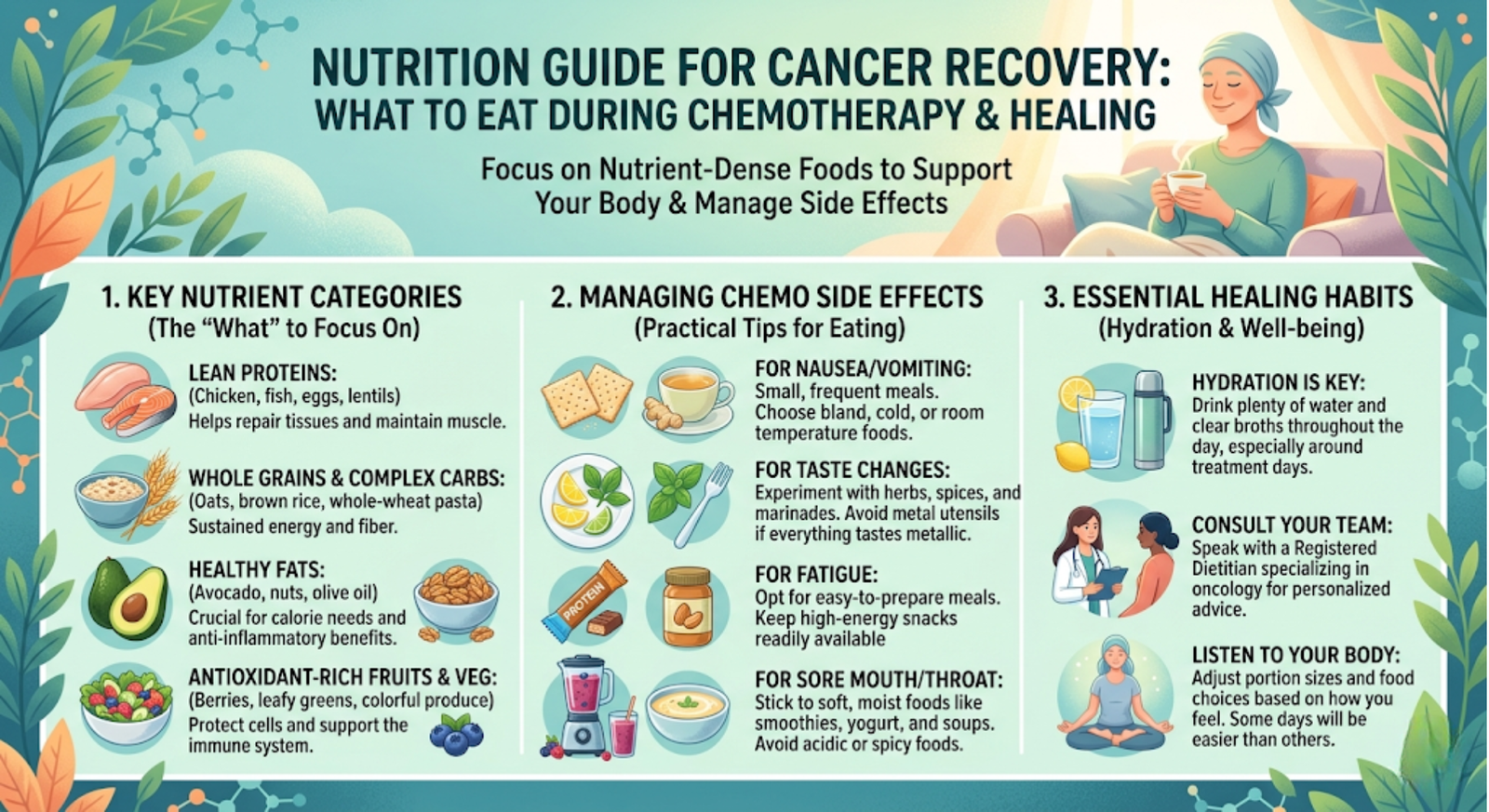
Recovering from cancer treatment is not just about medical care—it’s also about nourishing your body the right way. A well-balanced, thoughtful diet can help improve strength, reduce side effects, and support faster healing.
In this guide, you’ll learn how the right nutrition choices can empower recovery during and after chemotherapy, along with expert-backed tips to make eating easier and more effective.
Table of Contents
ToggleWhy Nutrition Matters in Cancer Recovery
Cancer treatments like chemotherapy, radiation, and surgery can take a toll on your body. Common challenges include fatigue, loss of appetite, nausea, and weakened immunity. Proper nutrition helps to:
- Maintain strength and energy
- Support immune function
- Improve treatment tolerance
- Promote tissue repair and healing
- Reduce complications and infections
Key Nutritional Guidelines During Cancer Treatment
1. Focus on a High-Protein Diet
Protein is essential for repairing tissues and maintaining muscle mass.
Best protein-rich foods (especially vegetarian options):
- Daal (lentils)
- Paneer (cottage cheese)
- Rajma (kidney beans)
- Chickpeas
- Soy products (tofu, soy milk)
- Nuts and seeds
👉 Tip: Add protein to every meal to support recovery.
2. Stay Well Hydrated
Hydration is crucial, especially during chemotherapy, to help flush toxins and reduce fatigue.
Healthy hydration options:
- Water (8–10 glasses daily)
- Coconut water
- Ginger tea (helps nausea)
- Lemon tea (refreshing and detoxifying)
- Clear soups
3. Eat Small, Frequent Meals
Loss of appetite is common during treatment.
Instead of 3 large meals:
- Eat 5–6 small meals throughout the day
- Choose easy-to-digest foods
- Keep healthy snacks handy
👉 Tip: Even small portions can provide big nutritional value when chosen wisely.
4. Include Anti-Inflammatory Foods
Inflammation can slow recovery. Adding natural anti-inflammatory foods can help.
Include:
- Turmeric (haldi)
- Green leafy vegetables (spinach, broccoli)
- Fruits like berries, apples, and papaya
- Nuts like almonds and walnuts
5. Light Exercise & Movement
While not directly nutrition, physical activity supports digestion and overall well-being.
- Gentle yoga
- Short walks
- Breathing exercises
👉 Always tailor activity to your energy levels and consult your doctor.
Personalized Nutrition is Key
Every cancer journey is unique. Dietary needs may vary based on:
- Type of cancer
- Treatment plan
- Side effects
- Existing health conditions
👉 Consulting a qualified nutritionist or physiotherapist ensures a safe and effective recovery plan tailored to your body.
Foods to Avoid During Cancer Treatment
- Highly processed and junk food
- Excess sugar and fried foods
- Raw or undercooked foods (infection risk)
- Alcohol and smoking
Frequently Asked Questions (FAQs)
1. What is the best diet during chemotherapy?
A balanced diet rich in protein, vitamins, and hydration is ideal. Include lentils, dairy, fruits, vegetables, and whole grains.
2. Can vegetarian patients get enough protein?
Yes. Foods like paneer, dal, rajma, chickpeas, soy, and nuts provide excellent protein.
3. How can I manage nausea during treatment?
Try ginger tea, eat small frequent meals, and avoid spicy or oily foods.
4. Is it okay to exercise during cancer recovery?
Yes, light exercise like walking or yoga can help, but always follow medical advice.
5. Should I take supplements?
Only if prescribed by your doctor or nutritionist. Avoid self-medication.
Your recovery deserves the right care—both medical and nutritional.
If you or your loved one is undergoing cancer treatment and needs expert guidance on diet, recovery, or advanced care:
👉 Book a consultation today with a specialist in gynecologic oncology and personalized cancer care.
Take the first step toward stronger recovery and better health. 🌸